The Second Solidarity Dialogues Cohort Completes Their 8 Days and Over 72 Hours of Training!
Over the course of eight days and more than 72 hours together, PLEDJ brought together 19 participants from diverse backgrounds to train the second cohort of facilitators for our Solidarity Dialogues program. What emerged over those eight days was a collective exploration of what it means to build relationships across differences, to sit with discomfort, and to create spaces where people can move toward shared understandings.
Led by Dr. Amal Elsana Alh’jooj, Mr. Brian Bronfman, Dr. Patrice Brodeur and Karoniahente (Dale Dione), the eight-day training invited participants to rethink dialogue beyond debate and persuasion.
As Dr. Amal Elsana Alh’jooj explained:
“Dialogue is not only a communication skill, it is about building relationships and seeking to understand the self, and the self is very dynamic [it] is changing and emerging.”
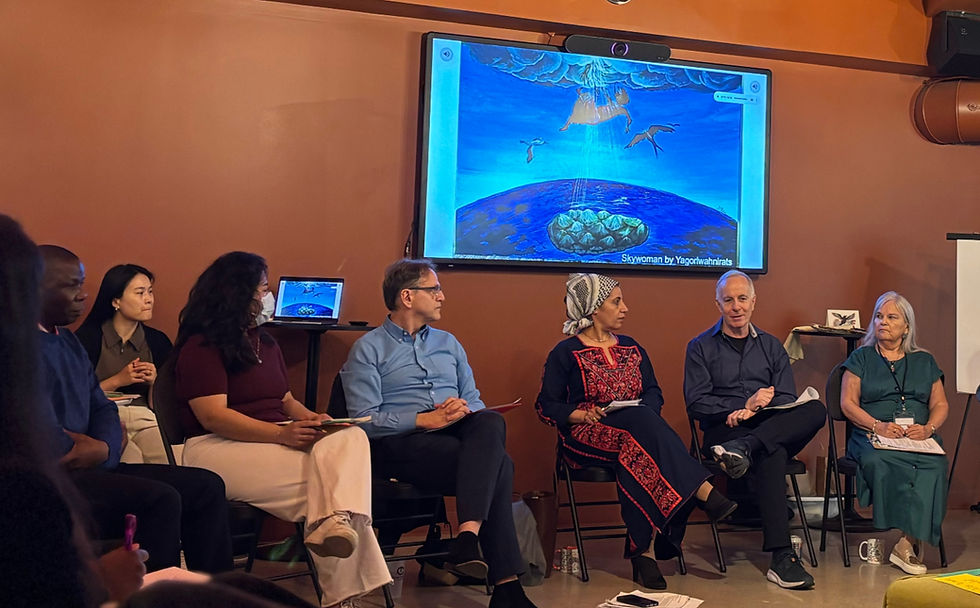
At a time marked by increasing polarization and social fragmentation, the need for dialogue has never been more urgent. The training prepared the leaders to grapple with a central question: “How do I hold space for a meaningful dialogue in a way where everyone is included… with their perspectives, identities, lived experiences, and histories?”
Drawing from traditions of liberation and Indigenous and Global South knowledge systems, participants explored dialogue as a transformative and relational process rooted in Hira, an Arabic concept referring to confusion and bewilderment. Hira is a necessary step in dialogue and it could be the step towards insight. Participants reflected on the idea that meaningful dialogue often requires people to become unsettled, challenged, and transformed through encounter.
Throughout the eight days, participants continuously engaged with questions that invited self-reflection, relational accountability, and deeper awareness of power:
What does courage look like?
Whose voices are validated and who feels safe to participate?
What makes it hard to speak honestly in groups, especially when differences exist?
How do we facilitate difficult conversations while remaining aware of power dynamics?
What would it mean to expand dialogue into broader communities, institutions, classrooms, and networks of care?
What happens when participants hold authority or influence outside the dialogue space?

“Courage is to bear witness, to show up, to not look away. At the personal level, it is courageous to be vulnerable and to share from your heart, and be authentic.”
- Liz Marshall (participant)
“As a facilitator, what is informing my reading of people's emotions?”
- Godfrey Makoha (participant)
Creating Change Rooted in Difference, Inclusion, Solidarity and Justice
Throughout the Solidarity Dialogues training, participants were engaged in an ongoing process of critical self- and social reflection, experiential dialogue practices, and collective learning. The cohort explored how lived experiences, intersectional identities, and social locations shape relationships, perceptions, and engagement within communities and institutions. Over the course of the program, participants reflected on personal and systemic biases, examined dynamics of power and exclusion, and grappled with dominant narratives that impact social cohesion and equity. Through facilitated dialogue and shared learning, the cohort practiced engaging across differences with empathy, accountability, curiosity, and care.
Participants also strengthened their capacity to navigate and facilitate difficult conversations, hold complexity, and build relationships grounded in mutual respect and solidarity. The training fostered deeper awareness of the role individuals and communities can play in advancing more inclusive and just forms of social change.
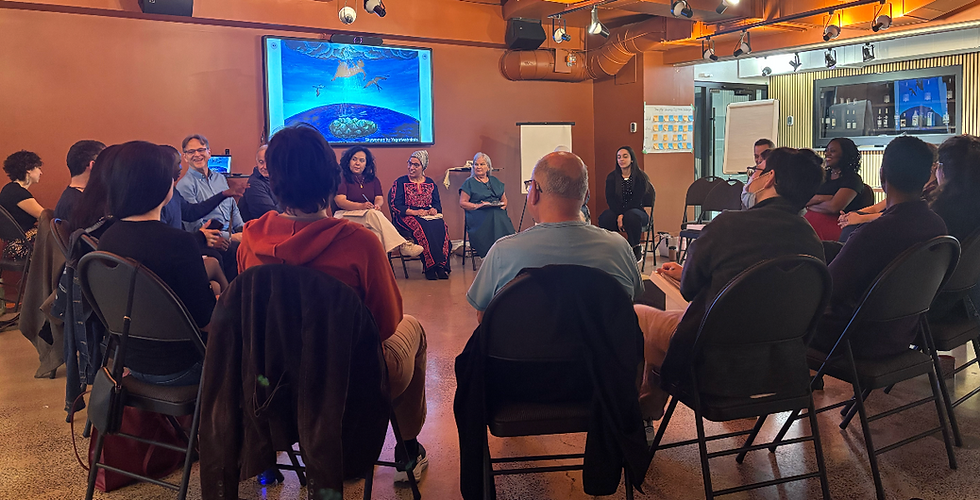
By centering solidarity as both a practice and a commitment, the dialogues cultivated the relationships, understanding, and collective capacity needed to create meaningful change. In this way, the program becomes transformative not simply through conversation itself, but through the ways those conversations inspire action, deepen connection across difference, and strengthen collective efforts toward inclusion, equity, solidarity, and justice.
Strengthening Our Momentum Together
The training invited everyone to think beyond the immediate circle in the room and to reflect on who remains absent from these conversations and why.
Many participants returned to the idea that dialogue is not about fixing others or forcing agreement. Rather, it is about creating the conditions for people to encounter one another differently, with curiosity, humility, and compassion.
As Carlene Gardner reflected:
"Not assuming in advance if people are going to agree or disagree on specific topics keeps us open-minded and curious, and avoids falling into the debate mentality trap. True, curious, open minds can surprise you.”
Participants left the training with practical tools for facilitation, but also with something deeper: hope. Hope that meaningful conversations are still possible during times of deep polarization. Hope that dialogue can become a liberatory process. Hope that people can move from isolation toward relationships and belonging.
The training closed with reflections on belonging, solidarity, and collective responsibility. Ola Khawasik captured this powerfully:
“Immigrant does not mean that you are powerless, refugee does not mean you are powerless. It's not integration we want to work on, it is belonging.”
Tendai's reflection further emphasized the importance of vulnerability and shared experience in building solidarity:
“We are not mindreaders; we are not able to know your experience until you share. Holding vital information to a conversation will put you in a situation where you are overlooked, as you are hiding what can bring you to potential solidarity with others.”
If shared understandings can begin to emerge over eight days, imagine what is possible over months, years, and across communities.
Join the Dialogue Community!
In the coming months, participants of the 2nd cohort will launch new Solidarity Dialogues initiatives within their own communities, classrooms and organizations.
If you are interested in participating in future dialogue spaces, facilitator trainings, or upcoming community initiatives, we invite you to join the growing Solidarity Dialogues community!
Fill out the interest form here to stay connected and be informed about upcoming initiatives and opportunities to participate.
PLEDJ team and the participants from the 2nd cohort of the Solidarity Dialogues Training
A special thank you to everyone who participated and made these 8 days possible!
The Solidarity Dialogues is a PLEDJ initiative, delivered in partnership with the Peace Network for Social Harmony. PLEDJ also expresses our appreciation for the generous support of the Government of Canada.
To learn more about the Solidarity Dialogues program, click here.


Comments