Solidarity Dialogues Conference: Exploring the Importance and Challenges of Dialogue in Academic Spaces
Updated: Feb 19
On Monday, September 15th, 2025, PLEDJ hosted the much-anticipated Solidarity Dialogues Conference, a remarkable gathering that united students, faculty, and leaders in a powerful exploration of dialogue’s role in academia. The evening was designed not just to facilitate conversation, but to spark reflection and collective action towards creating an environment where students and faculty feel confident to share their lived experiences.
Setting the Stage for Connection and Reflection
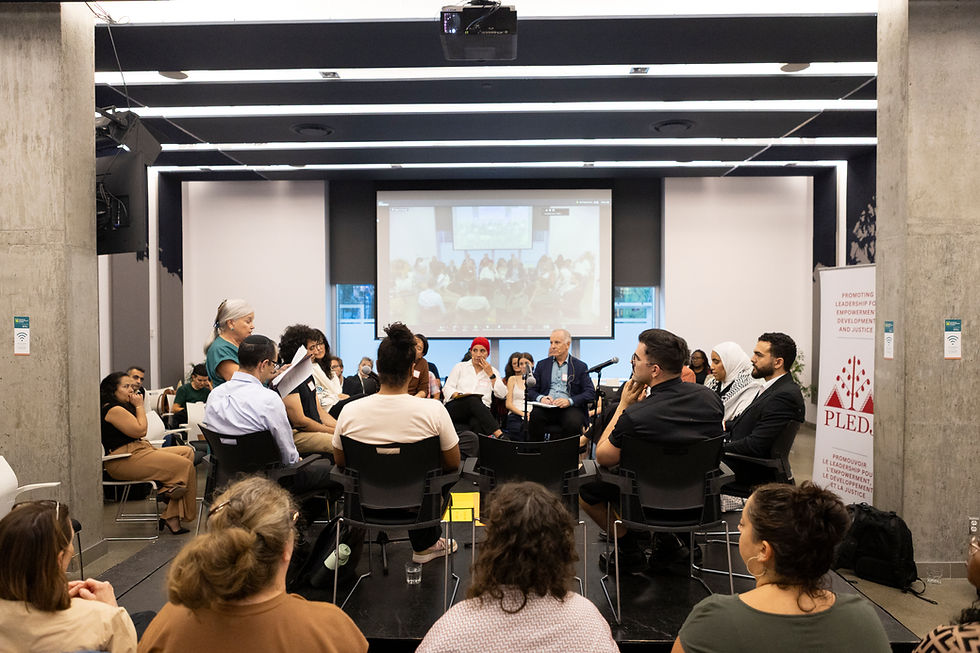
The event began with a warm reception, offering refreshments and an opportunity for guests, speakers, and participants to meet and connect. As the attendees filled the space, the room was set with a circle of chairs, centered around a stage where the dialogue would unfold. This physical arrangement was a symbol of unity and containment, where the outer circle held the space for the participants as they were engaging in a brave dialogue. It was an important reminder of the event’s core intention: to create a forum where every voice could be heard.
Karoniahente (Dale Dione), an Indigenous expert in restorative justice and a member of the first PLEDJ Solidarity Dialogues cohort, opened the evening with a profound reminder that the gathering was not by accident. "We have come together with a shared purpose," she said, setting the tone for the evening, “to build peace.”
Marissa Samek, Chairperson of PLEDJ’s Board of Directors, shared heartfelt reflections on the continued mission of PLEDJ. Her remarks highlighted the importance of meaningful, transformational conversations, the kind that sit at the core of PLEDJ’s Solidarity Dialogues. “With a more heart-centered approach,” she said, “we can begin to show up as individuals, not just as carriers of ideology. That’s when real connection, and real transformation, can happen.” Her words set a powerful tone for the evening, reminding all participants of the importance of showing up with both courage and compassion as we work collectively to shape a more just society.
Building Understanding: The Role of Dialogue in Times of Division
Hanya Omar, the Director of Operations at PLEDJ and Solidarity Dialogues Program Manager, gave an insightful presentation on the Program’s model, highlighting its core values and goals. She emphasized the importance of dialogue in today’s polarized world, reminding the audience that in times of deep division, “Dialogue is not a luxury, it is a necessity for our collective liberation.”
These words resonated deeply with those in attendance, sparking a sense of urgency around the need for open, honest conversations in academic spaces. For PLEDJ, dialogue is not just a theoretical exercise, it’s an essential practice for giving voices to those who are silenced, fostering mutual understanding, building community, and, ultimately, fuelling positive social change.
About the Model
The Solidarity Dialogues Model offers a transformative framework based on 6 core principles: Solidarity-Driven, Identity-Informed, Conflict-Transforming, Power Conscious and Liberatory in Practice, Safe and Brave and Action-Based. The Solidarity Dialogues challenge rigid identities and power imbalances, fostering spaces where discomfort leads to growth rather than division. In training community frontline leaders to facilitate dialogue, the program aims to expand positive social change through having difficult conversations, in brave and safe spaces.

The Heart of the Event: Safe and Brave Spaces for Dialogue in Academia
With that framework in mind, the dialogue portion of the evening was facilitated by Dr. Amal Elsana Alh’jooj, Founder of PLEDJ and Associate Professor at the McGill School of Social Work, and Brian Bronfman, co-founder of the Peace Network for Social Harmony. Together, they guided participants through a thoughtful exploration the evening’s theme: "The Importance and Challenges of Having Safe Spaces for Difficult Conversations in Academia."
What followed was a candid and eye-opening exchange where students and professors alike shared their thoughts on the state of academic discourse today and their personal experiences on campus. As the dialogue unfolded, several reflections emerged:
"Safety in academic spaces seems to equate to censorship," said one student. "We need to have these kinds of conversations to combat polarization that is so rampant in our generation."
A fellow student echoed this sentiment: "I look to universities as places where we believe we are educated, yet we have the opportunity to receive some of the best education in the world, and still, we stay ignorant, we refuse to learn and listen…"
A professor shared a sobering reality: "The university is not the same place I signed on to work at, and I have watched it transform into a space where safety means only talking to people who agree with you."
These reflections, though heavy, were necessary. They illustrated the tension between the ideals of academic freedom and the real-world challenges of navigating controversial or uncomfortable topics in a space that is meant to foster learning and growth.
These insights highlighted the shared concerns that both professors and students feel about the current state of academia. It was evident that the spaces designed for learning were becoming increasingly fragmented by ideological divides. However, there was also a sense of hope: a belief that through dialogue, change could be fostered.
Panel Discussion: The Challenges and Realities of Dialogue in Academia
After the nested dialogue, an interactive panel discussion took place, allowing panelists to reflect on the dialogue and bring their own expertise into the conversation. The panel featured diverse voices from academia, each offering unique perspectives on the challenges in fostering dialogue in university settings.

Collective Outcomes of the Panel Discussion:
The Impact of Social Media and Reputational Concerns: Social media has become a battleground for ideological clashes, where professors and students alike can be publicly shamed or vilified for their opinions. The issue of pressure to self-censor for fear of reputational damage, especially in the context of tenure and academic career advancement.
The Resilience Required for Difficult Conversations: Panelists emphasized that engaging in tough dialogues requires resilience, both emotional and intellectual. These conversations are often fraught with layers of historical trauma, making them especially difficult for marginalized voices. It’s not only about speaking but about the emotional labor of confronting painful truths.
The Need for Readiness: Effective dialogue hinges on readiness, not just for the person initiating the conversation but for the person receiving it as well. As emphasized in response to an audience question, sensitive topics need to be approached with care requiring both emotional maturity and mutual understanding from all participants.
Looking Ahead: Continuing the Conversation
By the end of the evening, participants, panelists, and guests were energized and reflective. There was a collective desire for more conversation, more reflection, more solidarity. As the evening drew to a close, several themes emerged on how we can continue to foster dialogue in academic spaces:
Creating spaces for open conversation: Hosting guest speakers, and providing structured opportunities for students and faculty to engage in challenging discussions.
Addressing burnout and stress: Recognizing the emotional toll of difficult conversations and encouraging solidarity among faculty and students.
Concrete precautions: Discussing policies around recording classroom discussions and preparing students for difficult topics at the start of the semester.
Fostering a shared sense of narrative: Ensuring that both students and faculty from diverse backgrounds can share their stories and experiences in a safe and respectful environment.

The Solidarity Dialogues Conference was a reminder of the transformative power of dialogue. It is only through conversations that we can build understanding, foster empathy, and create spaces where every voice is valued. As we continue to face the challenges of polarization in academia and beyond, let us hold on to the idea that dialogue is not just a tool, but a bridge to healing and collective liberation.
Let’s continue this important work together.
If you are interested in participating in a Solidarity Dialogue Initiative or being a part of the Second Cohort of the Solidarity Dialogues training, please fill this form.
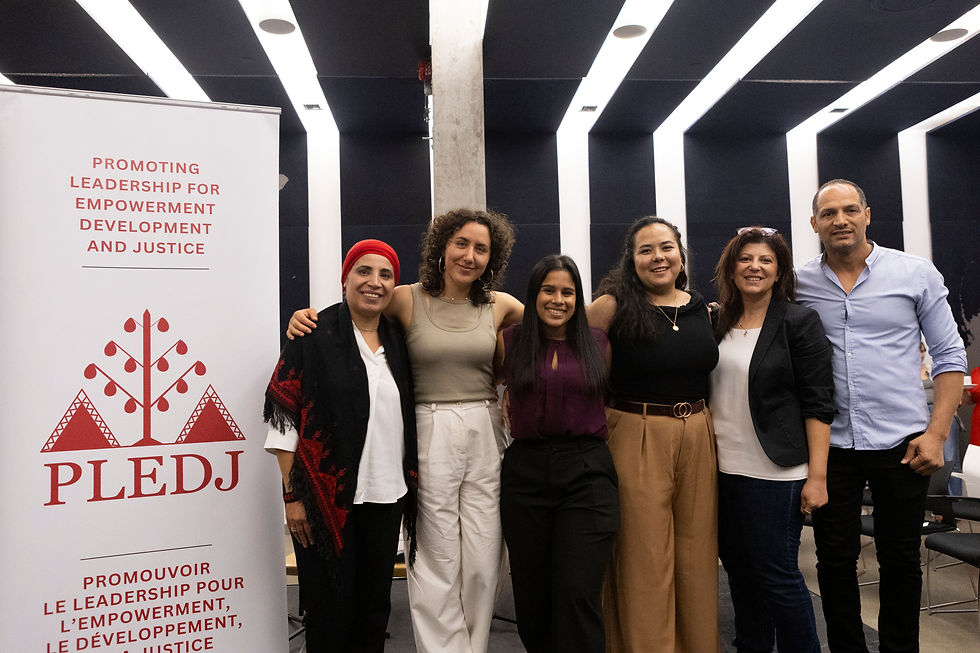
This conference was hosted by PLEDJ in collaboration with community and academic partners, and is proudly funded by the Government of Canada. The Solidarity Dialogues Program is delivered in partnership with the Peace Network for Social Harmony. To learn more about the Solidarity Dialogues program, click here. PLEDJ also expresses our appreciation for the support of the Canadian Race Relations Foundation, Power Corporation of Canada, Donner Foundation and Trottier Family Foundation for their support.


Comments